When a cold hits, most people reach for over-the-counter medicine. But in Indian households, the first line of defense has always been kadha — a warm, spiced herbal drink that’s been used for centuries to fight coughs, colds, sore throats, and congestion.
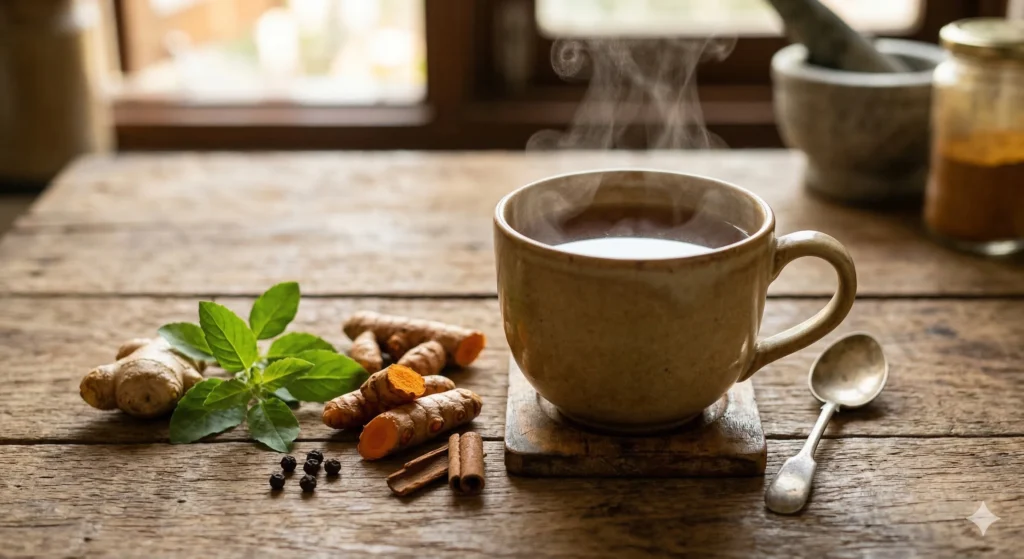
Kadha (also spelled kaadha or kashaya) is essentially an Ayurvedic decoction made by boiling herbs and spices in water. It’s not just folk wisdom — many of the ingredients commonly used in kadha have been studied for their anti-inflammatory, antimicrobial, and immune-boosting properties.
In this guide, you’ll find 5 tried-and-tested kadha recipes ranging from the classic all-purpose version to targeted recipes for specific symptoms. Each recipe uses common kitchen ingredients you probably already have at home.
Every winter growing up, my mother would make a big pot of kadha whenever someone in the family got a cold or feeling sneezy. The whole house would smell like ginger and spices. Now I make it for my own kids.
What Exactly Is Kadha?
Kadha is a traditional Ayurvedic herbal decoction — a concentrated liquid made by boiling herbs, spices, and sometimes roots in water until the volume reduces and the active compounds are extracted. Unlike tea, which is steeped briefly, kadha is simmered for 10–20 minutes, creating a stronger, more potent drink.
The word “kadha” comes from the Sanskrit word “kashaya,” which literally means “astringent” or “decoction.” In Ayurvedic medicine, kashaya is one of six basic tastes and is considered therapeutic for reducing excess mucus and congestion — exactly what you need during a cold.
Kadha gained massive mainstream attention during the COVID-19 pandemic, when India’s Ministry of AYUSH officially recommended it as an immunity-boosting measure. Google searches for “kadha recipe” spiked over 5,000% during that period, and interest has remained high ever since.
Why Does Kadha Work? The Science Behind the Ingredients
Kadha isn’t just one recipe — it’s a framework. Different combinations target different symptoms. But the core ingredients have genuine scientific backing:
| Ingredient | Active Compounds | What Research Shows |
| Ginger (Adrak) | Gingerols, shogaols | Reduces nausea, fights inflammation, has antiviral properties. A 2020 review in Nutrients confirmed its effectiveness against respiratory infections. |
| Turmeric (Haldi) | Curcumin | Powerful anti-inflammatory and antioxidant. Research in the Journal of Clinical Immunology shows it modulates immune cell activity and reduces inflammatory cytokines. |
| Tulsi (Holy Basil) | Eugenol, rosmarinic acid | Adaptogenic herb that supports immune function. Studies show antimicrobial activity against respiratory pathogens and stress-reducing properties. |
| Black Pepper (Kali Mirch) | Piperine | Increases absorption of curcumin by up to 2,000%. Also has antimicrobial and expectorant properties that help clear congestion. |
| Cinnamon (Dalchini) | Cinnamaldehyde | Antibacterial and antiviral properties. Research shows it can inhibit the growth of bacteria that cause respiratory infections. |
| Cloves (Laung) | Eugenol | Natural analgesic (pain reliever) and antiseptic. Particularly effective for sore throats and tooth pain. |
| Honey (Shahad) | Hydrogen peroxide, flavonoids | WHO recommends honey for cough relief. A 2021 BMJ study found honey was more effective than antibiotics for upper respiratory infections. |
The key advantage of kadha over individual remedies is synergy — these ingredients work better together than alone. For example, black pepper dramatically increases the absorption of turmeric’s curcumin, and ginger enhances the bioavailability of many other compounds.
Recipe 1: Classic All-Purpose Kadha (The Everyday Immune Booster)
This is the most versatile kadha recipe. It works for general cold and cough symptoms, sore throat, mild fever, and as a daily immunity drink during flu season.
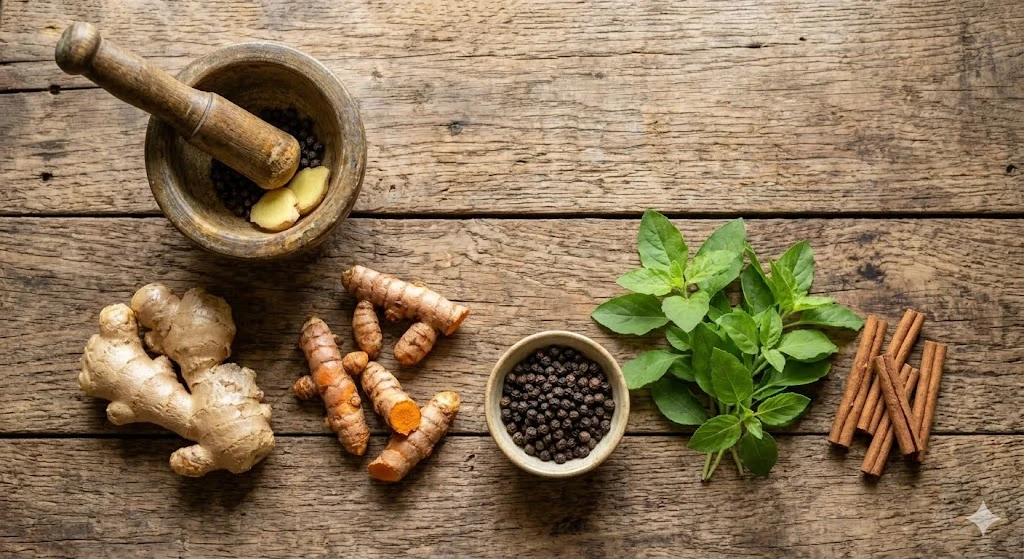
Ingredients (for 2 servings):
- 2 cups water
- 1-inch piece of fresh ginger, crushed or sliced
- 5–6 fresh tulsi (holy basil) leaves (or ½ teaspoon dried)
- ½ teaspoon turmeric powder (or a small piece of fresh turmeric root)
- 4–5 whole black peppercorns, lightly crushed
- 1 small cinnamon stick (or ¼ teaspoon powder)
- 2–3 whole cloves
- 1 tablespoon raw honey (add after cooking, not while boiling)
- Juice of ½ lemon (optional, add after cooking)
Instructions:
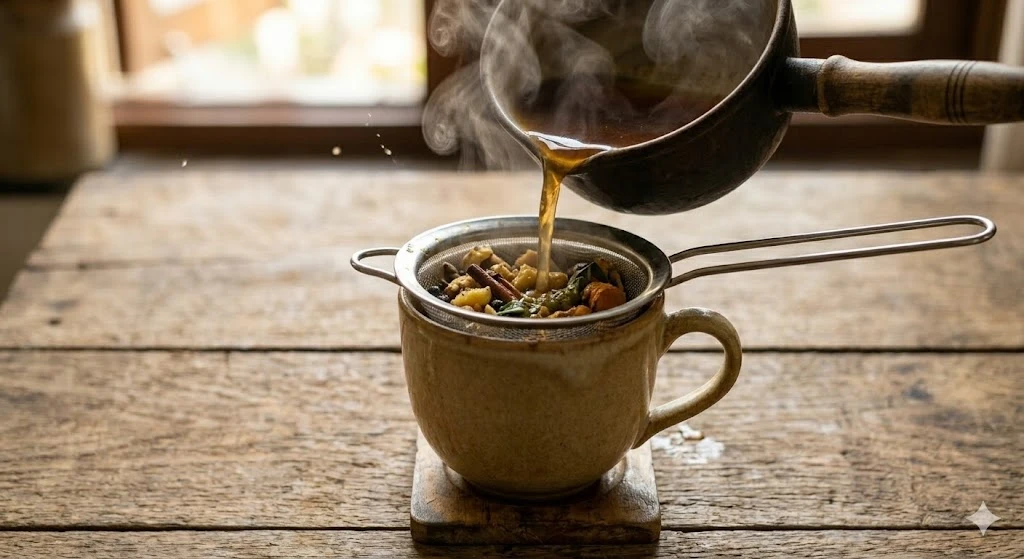
Add 2 cups of water to a small saucepan along with the ginger, tulsi leaves, turmeric, black peppercorns, cinnamon stick, and cloves. Bring to a boil over medium-high heat. Once boiling, reduce heat to low and let it simmer for 10–15 minutes. The water should reduce to roughly 1 to 1½ cups and turn a deep golden-brown color. Strain into cups through a fine mesh strainer. Let it cool for 2–3 minutes until it’s warm but not scalding, then add honey and lemon juice. Stir well and drink while still warm.
Pro tip: Never add honey to boiling liquid. Heat destroys the beneficial enzymes in raw honey. Always wait until the kadha has cooled to a drinkable temperature before stirring in the honey.
Also read: Jeera Water for Weight Loss: Recipe, Benefits, Timing & Results
Recipe 2: Strong Ginger Kadha for Severe Cough and Congestion
When you have a stubborn, productive cough with chest congestion, this ginger-heavy version works as a natural expectorant to help loosen and clear mucus.
Ingredients (for 2 servings):
- 2 cups water
- 2-inch piece of fresh ginger, grated (double the usual amount)
- 5–6 black peppercorns, crushed
- 2 cloves
- ½ teaspoon turmeric powder
- 1 tablespoon honey
- Pinch of salt (helps soothe the throat)
Instructions:
Grate the ginger directly into the water — grating releases more of the active gingerols than slicing. Add peppercorns, cloves, and turmeric. Bring to a boil, then simmer on low heat for 15 minutes. The liquid should reduce by about half. Strain, add honey and a tiny pinch of salt, and drink. The salt helps reduce throat inflammation and makes the ginger more tolerable.
Best for: Wet cough, chest congestion, phlegm, bronchial discomfort. Drink 2–3 times a day during acute symptoms.
Recipe 3: Sore Throat Kadha with Mulethi (Licorice Root)
If your primary symptom is a raw, painful sore throat, this version is specifically designed to coat and soothe the throat lining.

Ingredients (for 2 servings):
- 2 cups water
- 1 small piece of mulethi (licorice root) — about 2 inches, or ½ teaspoon powder
- 1-inch fresh ginger, sliced
- 5–6 tulsi leaves
- ½ teaspoon turmeric
- 1 tablespoon honey
Instructions:
Add mulethi, ginger, tulsi, and turmeric to 2 cups of water. Bring to a boil, then simmer on low for 12–15 minutes. Strain into cups. Add honey once it cools to drinking temperature. Sip slowly, letting the liquid coat your throat on the way down. The mulethi creates a naturally soothing, slightly sweet coating that provides immediate relief.
Why mulethi works: Glycyrrhizin, the main compound in licorice root, has been shown in studies to have anti-inflammatory, antiviral, and demulcent (throat-coating) properties. Ayurvedic practitioners have used it for sore throats for over 3,000 years.
Caution: People with high blood pressure should avoid mulethi, as glycyrrhizin can raise blood pressure. If you have hypertension, skip this recipe and use Recipe 1 instead.
Also read: How to Use Methi (Fenugreek) Seeds for Blood Sugar Control at Home
Recipe 4: Kids-Friendly Mild Kadha (For Children Ages 5+)
Traditional kadha can be too strong and bitter for children. This milder version is gentler on young stomachs while still providing immune support.
Ingredients (for 1 child-sized serving):
- 1 cup water
- ½-inch piece of fresh ginger, sliced thin
- 2–3 tulsi leaves
- ¼ teaspoon turmeric powder
- 2 black peppercorns (just 2, not 5–6)
- 1–2 tablespoons honey (adjust to taste)
- 2 tablespoons milk (optional, to mellow the flavor)
Instructions:
Simmer ginger, tulsi, turmeric, and peppercorns in 1 cup of water for only 7–8 minutes (shorter than adult versions for a milder taste). Strain well, making sure no whole spices remain. Let it cool until it’s just warm. Add honey generously and a splash of milk if your child finds it too bitter. Serve in a small cup.
Dosage for children: Ages 5–8: half a cup, once a day. Ages 8–12: half to full cup, once a day. Ages 12+: adult portion. Do not give kadha to children under 2 years old, and avoid honey for children under 1 year (risk of infant botulism).
‘My 7-year-old won’t drink regular kadha, but she actually asks for this version because the honey and milk make it taste almost like chai.
Recipe 5: Immunity Booster Kadha for Daily Use (Prevention, Not Just Treatment)
You don’t have to wait until you’re sick to drink kadha. This lighter version is designed for daily consumption during flu season to keep your immune system strong.
Ingredients (for 2 servings):
- 2 cups water
- ½-inch fresh ginger, sliced
- 3–4 tulsi leaves
- ¼ teaspoon turmeric
- 2–3 black peppercorns
- 1 small piece of cinnamon stick
- 1 teaspoon honey
- Squeeze of fresh lemon
Instructions:
This uses the same method as Recipe 1 but with reduced quantities of each ingredient. Simmer for just 8–10 minutes instead of 15. The result is a lighter, more tea-like drink that’s pleasant enough to have every morning. Think of it as your daily immunity tea rather than a medicine.
When to drink daily: Morning, after breakfast, is ideal for the daily prevention version. Don’t drink it on a completely empty stomach every day, as the ginger and spices may irritate the stomach lining over time with daily use.
Also read: 22 Home Remedies for Blocked Nose | Sore Throat | Stuffy Nose
How to Store Kadha
Fresh is best: Kadha is most potent when consumed immediately after making it. The volatile oils in ginger, tulsi, and other spices begin evaporating once the drink cools.
Refrigerator storage: If you want to batch-prepare, you can store kadha in a glass jar in the refrigerator for up to 48 hours. Reheat gently on the stovetop (not microwave) before drinking. Add honey and lemon fresh each time, not during storage.
Pre-mix dry ingredients: A time-saving hack is to pre-mix the dry spices. Combine turmeric powder, black pepper powder, cinnamon powder, and clove powder in a jar. Use 1 teaspoon of this mix per cup of water, along with fresh ginger and tulsi. This cuts preparation time in half.
When to Drink Kadha and How Much
During a cold or flu: 2–3 cups per day, spaced out (morning, afternoon, evening). Continue for 3–5 days or until symptoms improve significantly.
For sore throat: Sip small amounts throughout the day rather than drinking full cups at once. The frequent contact with the throat lining provides more consistent relief.
For daily prevention: 1 cup per day, preferably in the morning after breakfast, during cold and flu season (typically October through February in the US).
How long is it safe to drink daily? Most Ayurvedic practitioners recommend drinking kadha daily for up to 2–3 months during flu season, then taking a break. Year-round daily consumption isn’t necessary and could irritate the digestive system in some people.
Who Should Avoid or Limit Kadha?
- Pregnant women: Some kadha ingredients (especially tulsi in large amounts and mulethi) may not be safe during pregnancy. Stick to plain ginger-honey-lemon water instead.
- People with acid reflux or GERD: The ginger and spices can worsen heartburn. If this happens, reduce the ginger amount or skip kadha during reflux flare-ups.
- People on blood thinners: Ginger and turmeric have mild blood-thinning effects. Consult your doctor if you take warfarin or similar medications.
- People with high blood pressure: Avoid Recipe 3 (mulethi version) specifically, as licorice root can raise blood pressure.
- Children under 2: Too strong for very young children. Children under 1 should not have honey (risk of botulism).
- People with gallbladder issues: Turmeric stimulates bile production and may worsen gallbladder problems.
Kadha vs Over-the-Counter Cold Medicine: How Do They Compare?
| Factor | Kadha | OTC Cold Medicine |
| Speed of relief | Gradual (30–60 min) | Faster (15–30 min) |
| Side effects | Minimal (possible heartburn) | Drowsiness, dry mouth, dizziness |
| Root cause treatment | Supports immune system actively | Masks symptoms only |
| Cost | Almost free (kitchen ingredients) | $8–$15 per box |
| Antibiotic resistance | No risk | Overuse contributes to resistance |
| Safe for daily prevention | Yes (mild version) | No (not designed for daily use) |
| Backed by research | Individual ingredients well-studied | Extensively studied and FDA approved |
The honest answer is that kadha and OTC medicine serve different roles. For mild to moderate cold and cough symptoms, kadha can be highly effective and avoids the side effects of medication. For severe symptoms, high fever, or symptoms lasting more than a week, see a doctor — kadha is a complement to medical care, not a replacement.
Frequently Asked Questions
Can I drink kadha and take cold medicine at the same time?
Generally, yes. Kadha made from common kitchen spices does not interact with most over-the-counter cold medications. However, if you’re taking prescription medications, check with your doctor or pharmacist to be safe, particularly regarding ginger and turmeric’s mild blood-thinning effects.
Can I drink kadha if I don’t have a cold?
Absolutely. The daily prevention recipe (Recipe 5) is designed exactly for this purpose. Many families in India drink a mild kadha every morning during the winter months as a preventive measure, similar to how Americans might take vitamin C supplements.
What’s the difference between kadha and herbal tea?
The main difference is preparation intensity. Herbal tea is steeped in hot water for 3–5 minutes. Kadha is simmered (boiled on low heat) for 10–20 minutes, which extracts significantly more active compounds. Kadha is also typically made with whole spices rather than dried tea leaves, making it more concentrated and potent.
Can I use ground spice powders instead of whole spices?
Yes, but whole spices are preferred because they release their compounds more gradually during simmering and produce a cleaner, less gritty drink. If using powders, reduce the quantity by half (powders are more concentrated) and strain very well through a fine cloth or coffee filter.
My kadha tastes too bitter. How do I fix it?
Add more honey — up to 2 tablespoons per cup. A squeeze of fresh lemon also helps balance bitterness. You can also reduce the simmering time to 8 minutes instead of 15 for a milder taste. If you’re particularly sensitive, start with Recipe 5 (the light daily version) and work your way up.
Can kadha help with COVID-19?
Kadha is not a treatment or cure for COVID-19. However, India’s Ministry of AYUSH recommended kadha as a general immunity support measure during the pandemic. The anti-inflammatory and immune-modulating properties of the ingredients may help your body’s overall defense system, but it should never replace medical treatment, vaccination, or prescribed medications.
The Bottom Line
Kadha is one of the most practical and effective home remedies you can make for cold, cough, and sore throat. It costs almost nothing, uses ingredients most kitchens already have, and has genuine scientific backing for its key ingredients. The five recipes in this guide cover everything from everyday prevention to targeted relief for specific symptoms.
Start with Recipe 1 (the classic version) the next time you feel a cold coming on. Make it part of your routine during flu season, and you may find yourself reaching for the medicine cabinet far less often.
Disclaimer: This article is for informational purposes only and does not constitute medical advice. Kadha is a traditional home remedy and is not a replacement for professional medical treatment. If symptoms persist for more than 7 days, worsen significantly, or include high fever (above 103°F), difficulty breathing, or chest pain, seek medical attention immediately.